

Compiler-Driven Development in Rust: Redefining the Way We Write Code
In the world of software development, finding ways to enhance code quality and reduce bugs is a constant goal.

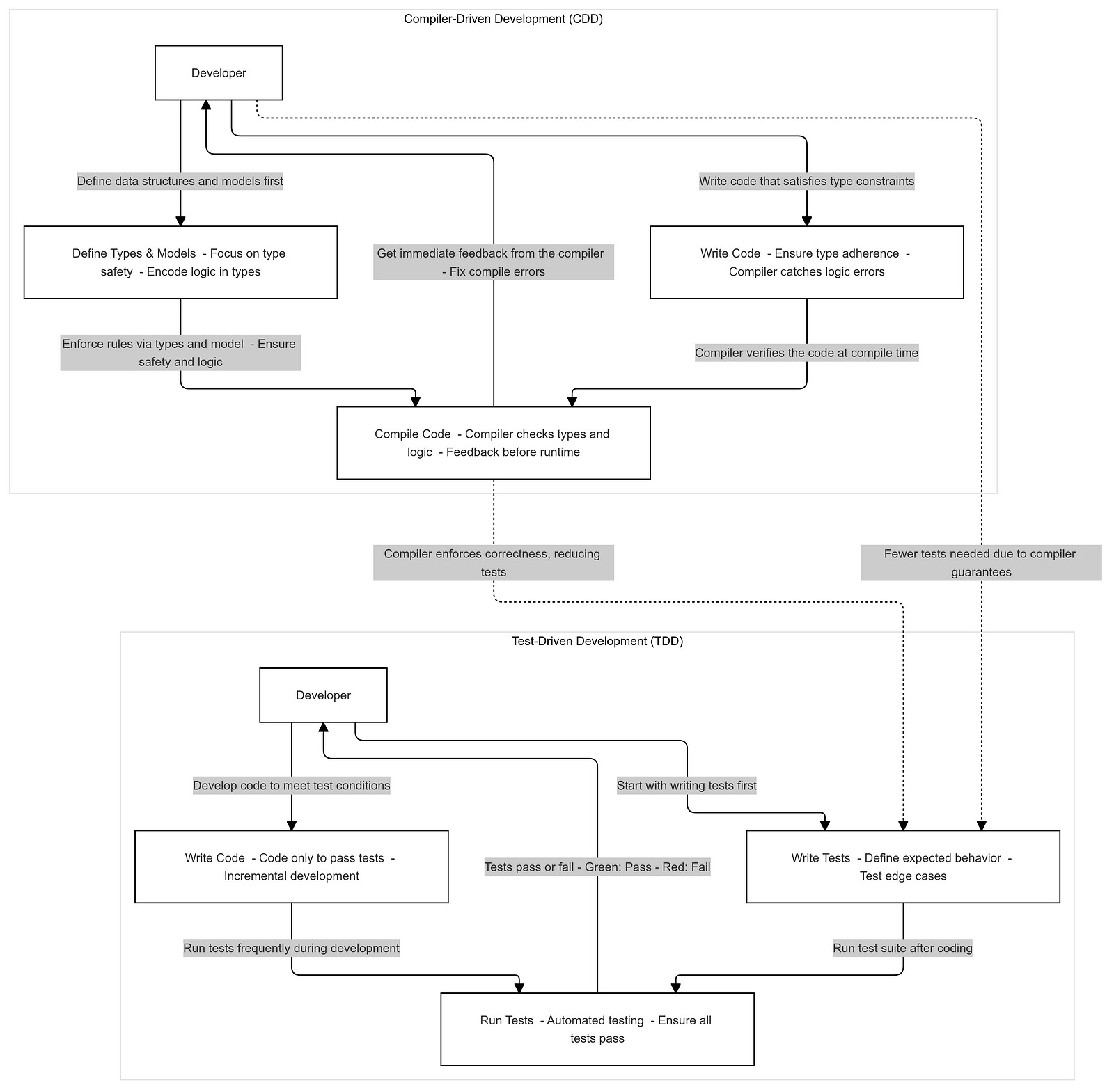
In the world of software development, finding ways to enhance code quality and reduce bugs is a constant goal. Over the years, methodologies like Test-Driven Development (TDD) have emerged to address these issues by encouraging developers to write tests before writing any functional code. TDD has undoubtedly proven to be effective, offering immediate feedback on whether code is working as expected. But what if there were a way to skip some of the labor-intensive test writing without sacrificing confidence in your code? This is where Compiler-Driven Development (CDD) shines, and no language exemplifies CDD’s potential better than Rust.
Rust, with its rich type system and safety features, enables developers to build reliable, high-performance software while reducing the overhead of extensive runtime testing. Compiler-Driven Development shifts a significant amount of work from the runtime phase to compile time, allowing the developer to leverage the power of the compiler to catch errors early and ensure the integrity of the code. In this article, we’ll dive deep into the world of CDD, explore why Rust is so well-suited for it, and examine how this approach is changing the way developers think about writing software.
What is Compiler-Driven Development?
Compiler-Driven Development (CDD) is a software development practice that focuses on leveraging the compiler to verify the correctness of your code at compile time, rather than relying heavily on tests or runtime checks. At its core, CDD involves using a language’s type system to model the logic of your application and then letting the compiler do the hard work of validating that your code is sound. In Rust, this approach is particularly powerful because of the language’s advanced type system and strict compile-time guarantees.
In contrast to Test-Driven Development, where you write tests first and then write code to pass those tests, CDD doesn’t require you to write unit tests upfront. Instead, you rely on the compiler to enforce the rules and constraints you’ve set through your type definitions. By the time your code compiles, you can be reasonably sure that it will work as expected.
This doesn’t mean tests are unnecessary in CDD, but it reduces the number of tests you need to write by shifting much of the burden of validation to the compiler. As a result, CDD allows for faster feedback loops, letting developers focus on the core logic of their application without being bogged down by the minutiae of runtime testing.
Why Rust is Ideal for Compiler-Driven Development
Rust’s design philosophy makes it a natural fit for CDD. One of the key aspects of Rust is its powerful type system, which allows you to encode a lot of the logic that would normally require runtime checks or tests in other languages. Rust’s compiler can enforce these constraints at compile time, which significantly reduces the likelihood of bugs making it into production.
Rust’s type system is far more expressive than those found in many other languages. For example, Rust allows developers to define complex enums and structs that can model various aspects of an application’s domain with precision. These types can represent everything from simple data structures to complex state machines, and the compiler ensures that they are used correctly throughout the codebase.
Additionally, Rust’s borrow checker and memory safety guarantees prevent many common programming errors, such as null pointer dereferencing, buffer overflows, and data races in concurrent programs. This is achieved without the need for a garbage collector or extensive runtime checks, which makes Rust an excellent choice for systems programming and high-performance applications.
In Rust, the compiler serves not just as a translator of code but as an active participant in the development process. It works with the developer to ensure that the code is not only syntactically correct but also logically sound. By shifting much of the validation process to compile time, Rust allows developers to catch errors early, long before they manifest as runtime bugs.
The Evolution from Test-Driven Development to Compiler-Driven Development
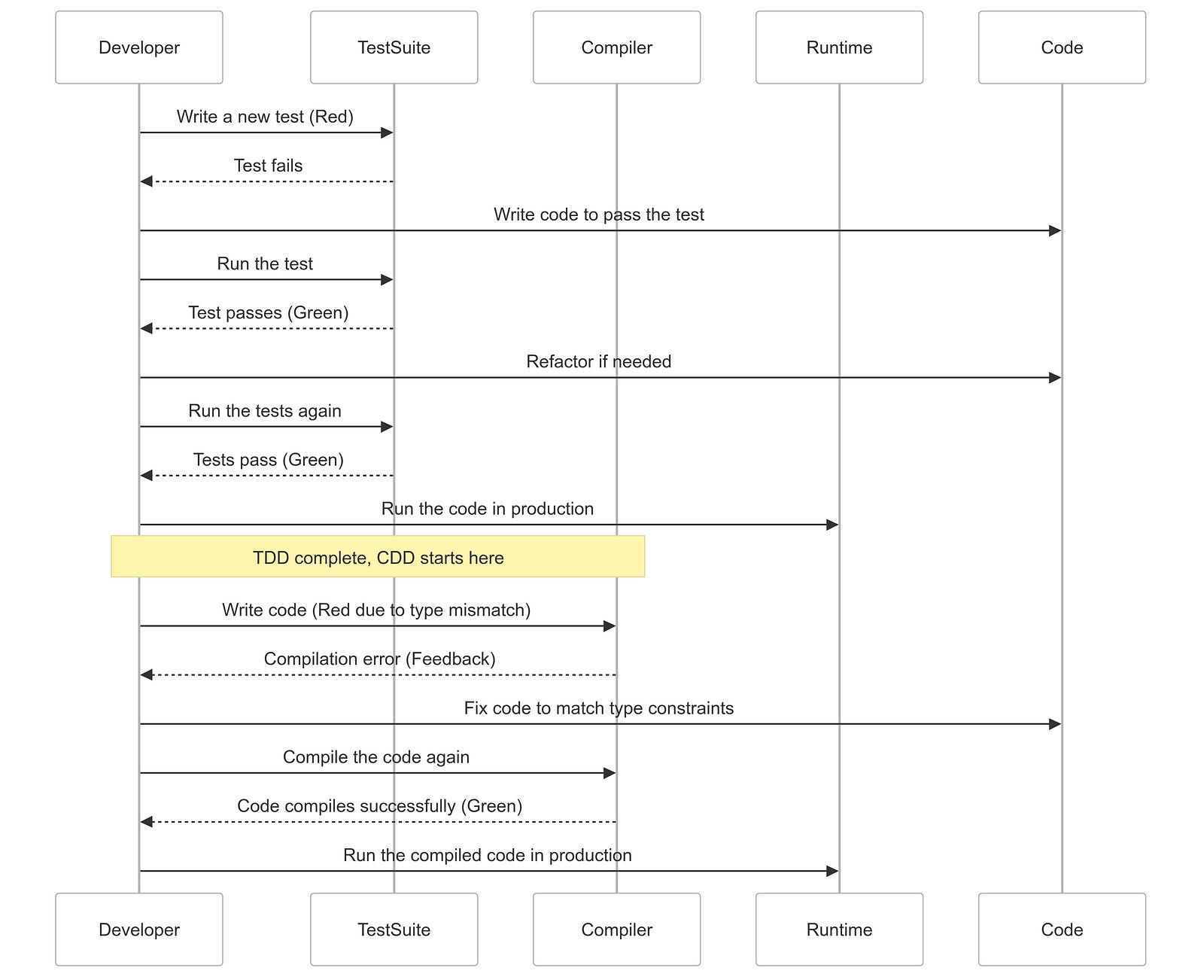
To fully appreciate the benefits of CDD, it’s helpful to understand where it fits within the broader landscape of software development methodologies. Test-Driven Development (TDD) has long been a popular approach, especially in dynamically-typed languages where runtime errors are more common. In TDD, the developer writes a test first, watches it fail, and then writes just enough code to make the test pass. This red-green-refactor cycle ensures that every piece of code is covered by a test, giving developers confidence that their software works as expected.
