

Summoning the Demon: OpenAI’s Battle Between Idealism and the Billion-Dollar GPU Farm
When Elon Musk offered Tesla’s billions for total control, OpenAI’s founders had to choose: sacrifice their open-source soul or starve their models.

Download the entire book using the button at the end of this article
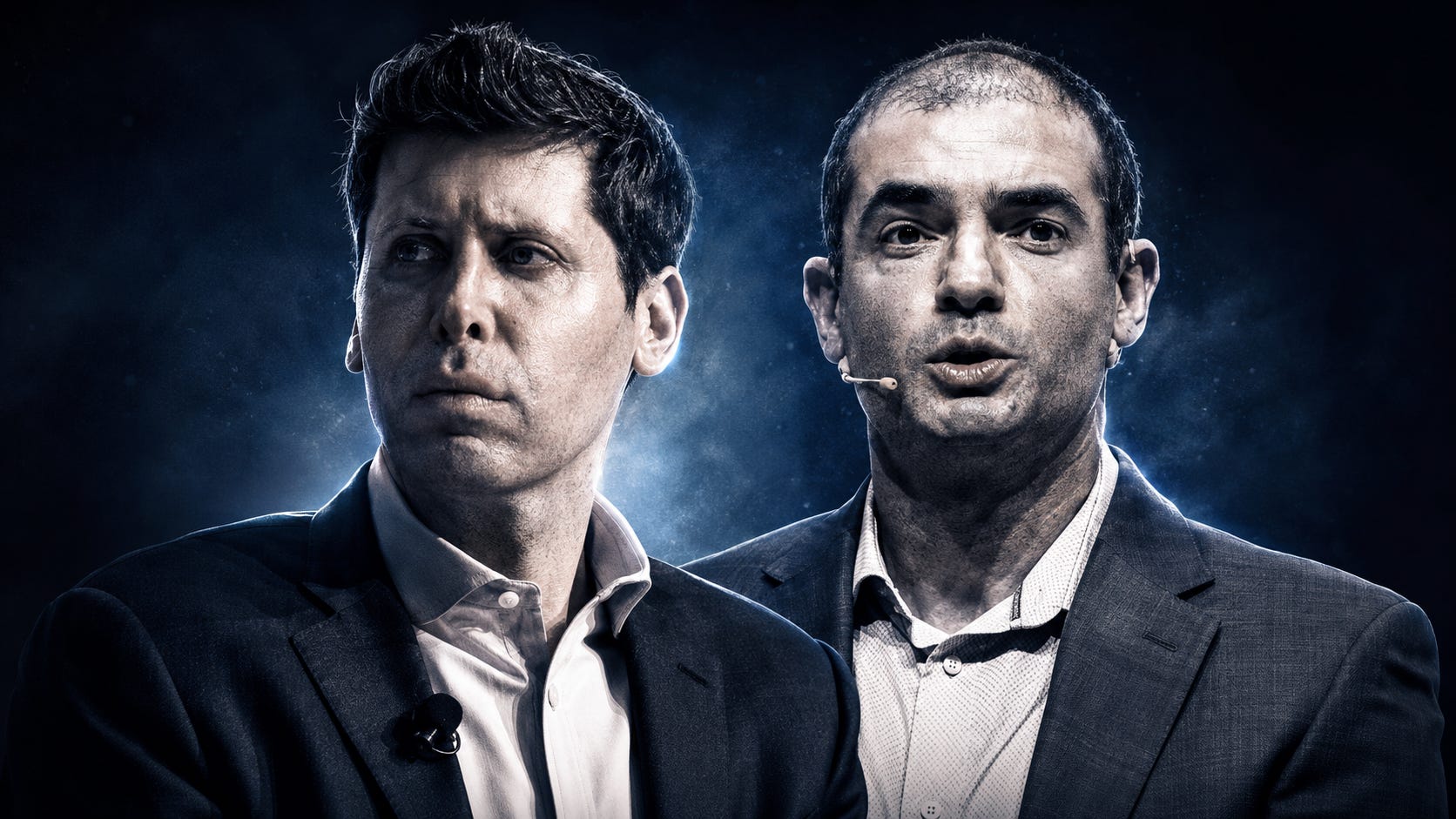
The Rosewood Hotel meeting reads like a recruitment theater designed to unsettle. In a private room in the summer of 2015, three people waited—Sam Altman, freshly recast from startup incubator boss into nonprofit boss-in-waiting; Greg Brockman, the former Stripe CTO whose expertise was in production-grade engineering rather than cutting-edge research; and Ilya Sutskever, the researcher whose technical reputation mattered most. Elon Musk arrived late, loud enough that the room took notice, and did what he knew how to do: he framed the problem in stakes so large they buckled ordinary risk calculus. His line—“we are summoning the demon… probably within the decade”—was rhetorical, apocalyptic, a summons to act. The pitch was simple in form and paradoxical in content: leave the Google salary and the corporate compute farm, accept modest pay and scrappy facilities, and join a nonprofit set up as a counterweight to big tech.
That tension—idealism as recruitment tool—was baked into OpenAI from the first email threads. Openness, the promise to publish and share, functioned less as a pure moral commitment than as a lure for talent. Ilya himself acknowledged that candidly: to recruit the best people, sharing results and code was an advantage when the organization could not match corporate salaries. His early note to Musk makes the trade visible: openness helps attract researchers in the short and possibly medium term, even if the long-term posture about disclosure might need to change. The narrative of Bell Labs and Xerox PARC—get the smartest people in a room, give them freedom, and breakthroughs will follow—was part myth, part organizing metaphor. In practice, the recruiting argument mattered more than the ideal.
Ilya saying yes at NeurIPS later that year converted a rhetorical pitch into an organizational identity. His acceptance provided both credibility and momentum; other researchers followed because a genuine researcher had chosen this messy experiment over a comfortable corporate lab. But momentum and mission did not automatically translate into coherent strategy. The lab’s earliest months showed an odd mixture of intellectual abundance and organizational drift: teams chased disparate curiosities, some attempting to replicate the flashier DeepMind results, others producing demonstrative robotics demos. In public-facing terms OpenAI produced Python libraries and smaller engineering artifacts; internally the question loomed whether that was enough. The specter of AlphaGo—DeepMind’s public victory—was a mirror in which OpenAI’s relative lack of high-impact, compute-heavy outputs became visible. For a lab that had promised to be a credible counterweight, the reality was that researchers were dispersed across projects, and leadership had not yet converted goodwill into concentrated priorities.
The technical axis of that problem was blunt: compute scale had become decisive. The neural-net renaissance that preceded OpenAI was not primarily a new algorithmic trick discovered in isolation; it was the conjunction of models, data, and substantially more computation. GPU clusters—orders of magnitude faster for the linear algebra at the heart of neural nets than the CPU rigs of the previous era—let teams train larger models on much more data and for longer. The practical implication was a strategic one: anyone hoping to “hold a candle to Google” needed access to vast, continuous GPU resources. The narration’s line that they needed “billions of dollars worth of compute” is a blunt way to translate that technical reality into organizational arithmetic. Donations and intermittent billionaire largesse could cover salaries for a while, but purchasing and operating the kind of GPU farms that underwrote cutting-edge work required a different scale and a different business model.
The gap between a scrappy research shop and a corporate GPU farm can be described concretely: at corporate labs, researchers run experiments on dense clusters of purpose-built accelerators, scheduled, instrumented, and paid for as an engineering service; at a startup or nonprofit, progress often starts on a few laptops or a handful of rented instances. The difference is not only raw FLOPs but also the ability to iterate quickly, to run hundreds of long experiments in parallel, and to build the kind of production pipelines that support repeated scaling. Those are not merely technical conveniences; they are competitive levers. When a model’s performance improves with more compute, the organization that can provision and sustain that compute becomes the one that sets the pace.
That technical constraint is what converted an abstract governance debate into an existential bargaining problem. In September 2017, a deal was placed on the table: fold OpenAI into Tesla, and receive effectively unlimited compute budget and executive leadership from the entrepreneur who had driven the initial pitch. The terms, as presented in the narration, forced a naked choice. The promise was everything OpenAI lacked—sustained access to the hardware and operational resources needed to pursue large-scale training at tempo. The cost was precisely the set of concentrations of power OpenAI had been founded to oppose: governance control, a single dominant CEO, board power concentrated in one individual. For people who had joined under an open, nonprofit umbrella—drawn in by the rhetoric that the research should benefit humanity—the idea of trading governance for compute was a moral and strategic conundrum.
The reaction inside the organization was painful and procedural. Ilya and Greg drafted what the narration calls a “vulnerable and honest” email to Elon, detailing concerns about the proposal and the risks of ceding control. That email was not a negotiation tactic; it was an attempt to preserve the project’s stated principles by appealing to the founder’s willingness to tolerate uncertainty. Elon’s reply—announcing that he would stop funding unless the leadership committed one way or another—moved the debate from deliberation to ultimatum. The choice the leadership faced was not only whether to accept a particular investor’s terms; it was whether to accept a governance model that would concentrate the very power OpenAI had set out to distribute.
The short-term response was practical triage. External donors stepped in to cover immediate needs—Reid Hoffman provided stopgap funding to keep salaries paid—but those kinds of contributions did not change the structural mismatch. A nonprofit recruiting on openness could attract researchers, but the openness that helped staff the lab now constrained its ability to secure the resources needed to scale. The lab’s internal planning had already begun to contemplate shedding the strict nonprofit status because the compute reality demanded a different set of instruments: longer-term capital commitments, procurement of fleets of accelerators, and the operational staff to run them. Those instruments are typically housed inside companies that can offer the predictability of ongoing budgets and revenue or a corporate parent able to internalize research as an engineering function.
What matters here is the functional role of openness as both recruitment strategy and later as a potential impediment. Open-source release signals to researchers that their work will live in the scientific commons; it reduces the perceived opportunity cost of joining a lower-payership because the researcher’s reputation and code travel freely. But once the competitive frontier shifted toward scale, that same posture signaled to potential large-scale funders that the lab would not retain intellectual property or maintain the kind of secrecy strategic partners sometimes require. The irony is structural: the very promise that let OpenAI assemble a critical mass of talent—“open-source was a recruiting tool from the start”—was becoming the institutional friction that prevented it from building the compute-backed research pipeline it needed to be a technological peer to Google.
By the end of this phase the organization’s internal map had changed. The question was no longer solely about mission rhetoric; it had become an operational calculus about which governance and funding arrangements could sustainably purchase GPU-led scale. That realization closed the loop between earlier technical history—the emergence of GPU-driven gains—and organizational consequence. The choice to remain strictly nonprofit and open was now visible as a constraint on the ability to run the kinds of experiments that defined the era’s breakthroughs. The bargaining over the Tesla offer, the drafting of candid emails, and the stopgap funding that followed were not trivia; they were the moments when a research project confronted the economics of computation and discovered that ideals and infrastructure are often in tension.
Whatever path OpenAI would choose next, the chapter closes with that pressure unmistakable: recruiting through openness had worked to assemble talent, but the lab could not sustainably convert that human capital into the compute-intensive breakthroughs of the moment without changing the way it accessed and governed resources. The technical imperative—transformer scaling and the heavy compute budgets it required—had become, for the organization, a governance problem.
Use the button below: